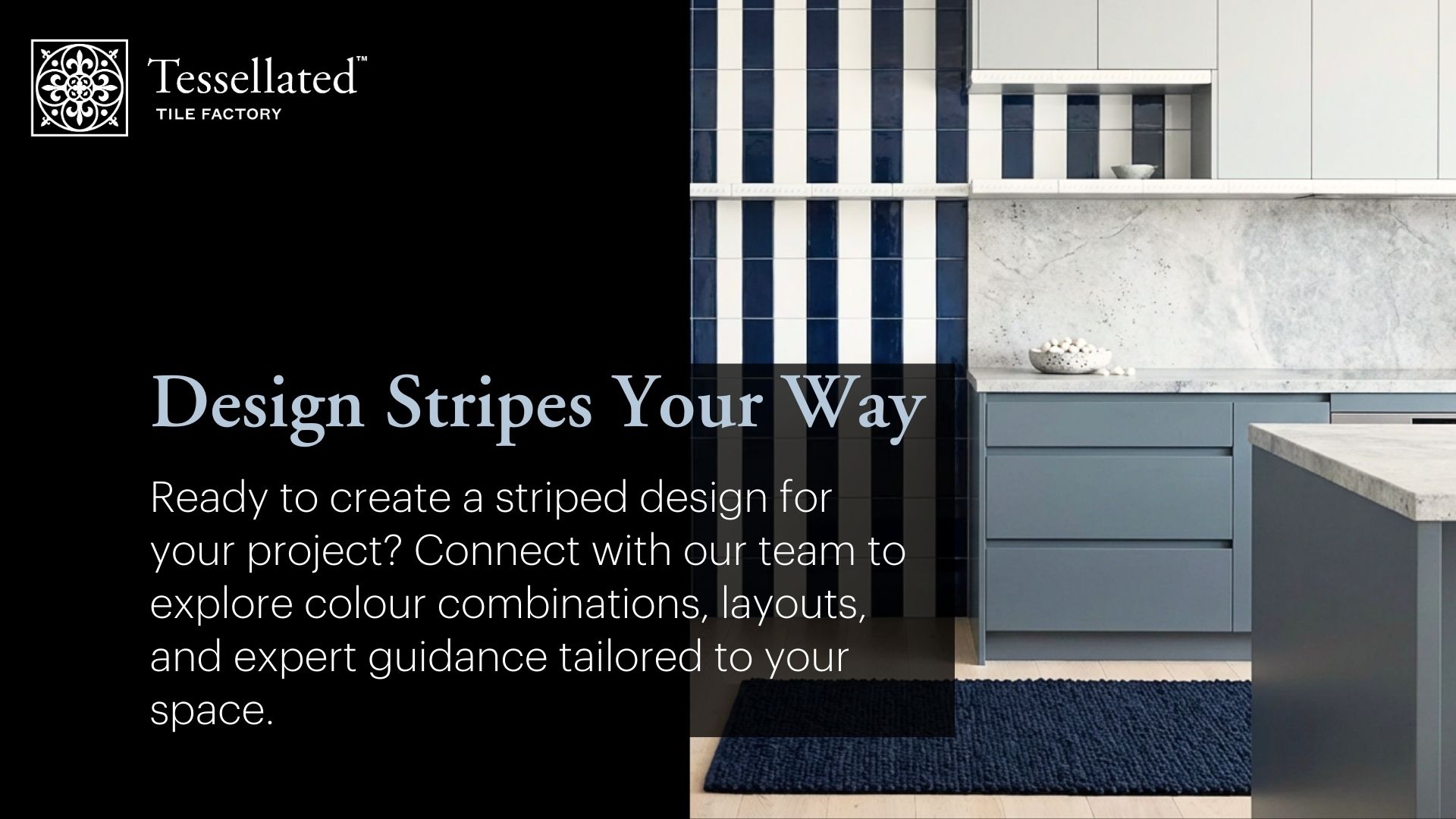

Stripes remain a powerful design element in interior spaces, continuing their strong presence into 2026. Timeless yet adaptable, striped patterns offer structure, rhythm, and visual movement, making them a favourite among designers seeking balance between classic style and contemporary expression. Whether bold or subtle, stripes naturally draw the eye and create a sense of order that feels both intentional and refined.
In modern interiors, stripes are no longer limited to soft furnishings or wallpaper. Tiles—particularly handcrafted and textural finishes—have become a key medium for introducing striped patterns. When paired with thoughtful colour palettes, striped tiles can elevate walls into architectural features, seamlessly blending heritage charm with modern design sensibilities
The History of Stripes in Interior Design

Stripes have a long and fascinating history in interior design, evolving from symbols of structure and order into timeless decorative elements. In early architectural and decorative traditions, stripes appeared in classical columns, stone flooring, and textiles, where repetition and symmetry were used to create harmony and balance. During the Victorian era, striped wallpapers, tiled floors, and fabric patterns became highly popular, reflecting the period’s appreciation for craftsmanship, geometry, and decorative detail. Stripes were often used to define spaces, guide the eye, and introduce visual rhythm into grand homes and public buildings.
As design movements progressed into the 20th century, stripes adapted seamlessly to modernism and minimalism. Their clean lines suited contemporary interiors, offering a way to add interest without ornamentation. Today, stripes continue to bridge classic and modern design, appearing in tile layouts, wall finishes, and architectural detailing. Their enduring appeal lies in their versatility—bold or subtle, traditional or modern—making stripes a design language that transcends trends while continually evolving with new materials, colours, and textures.
Striped Moodboards Using Craquelle Victorian Subways
Our latest moodboards showcase how Craquelle Victorian subway tiles can reinterpret classic stripe designs with a contemporary edge.
Teal Blue & White
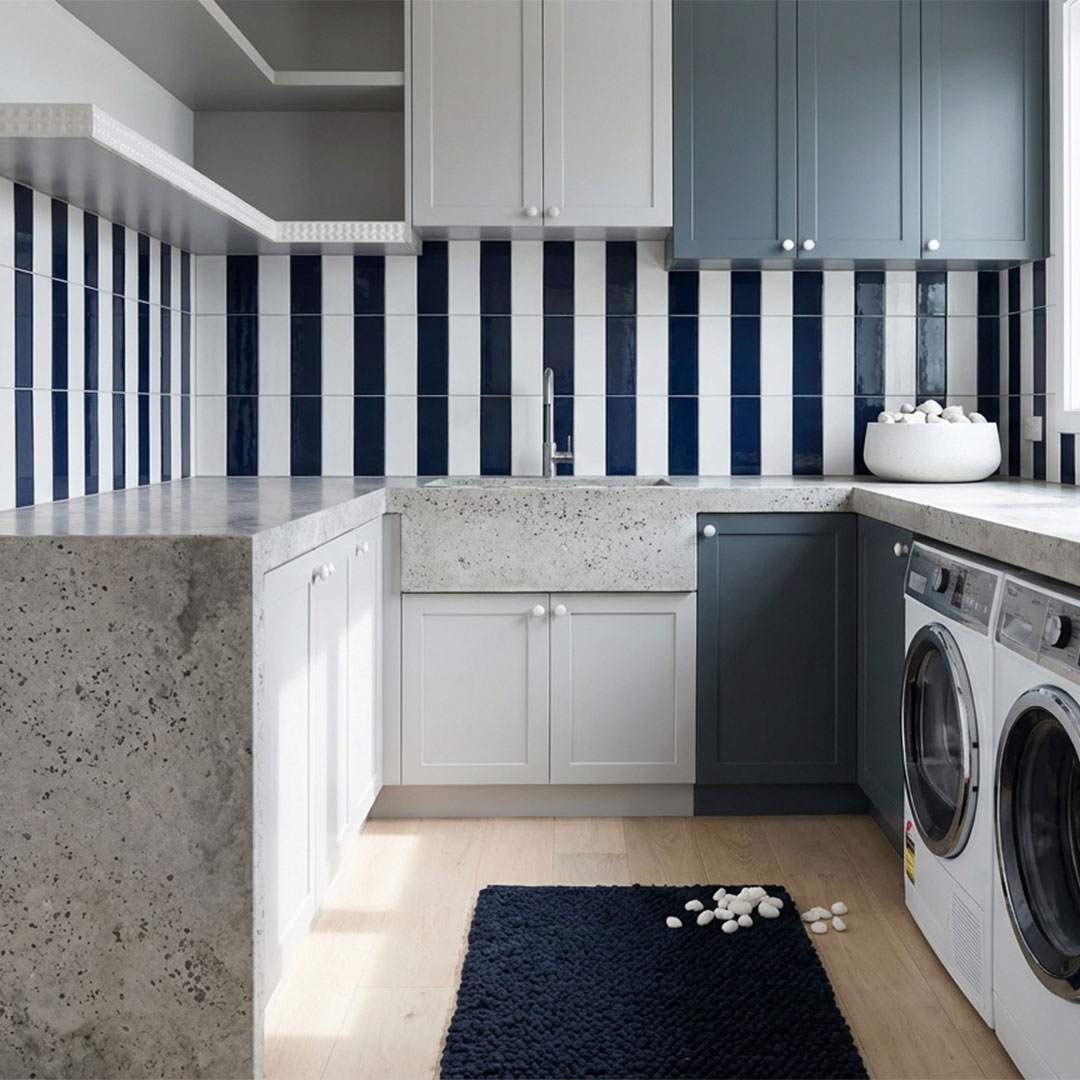
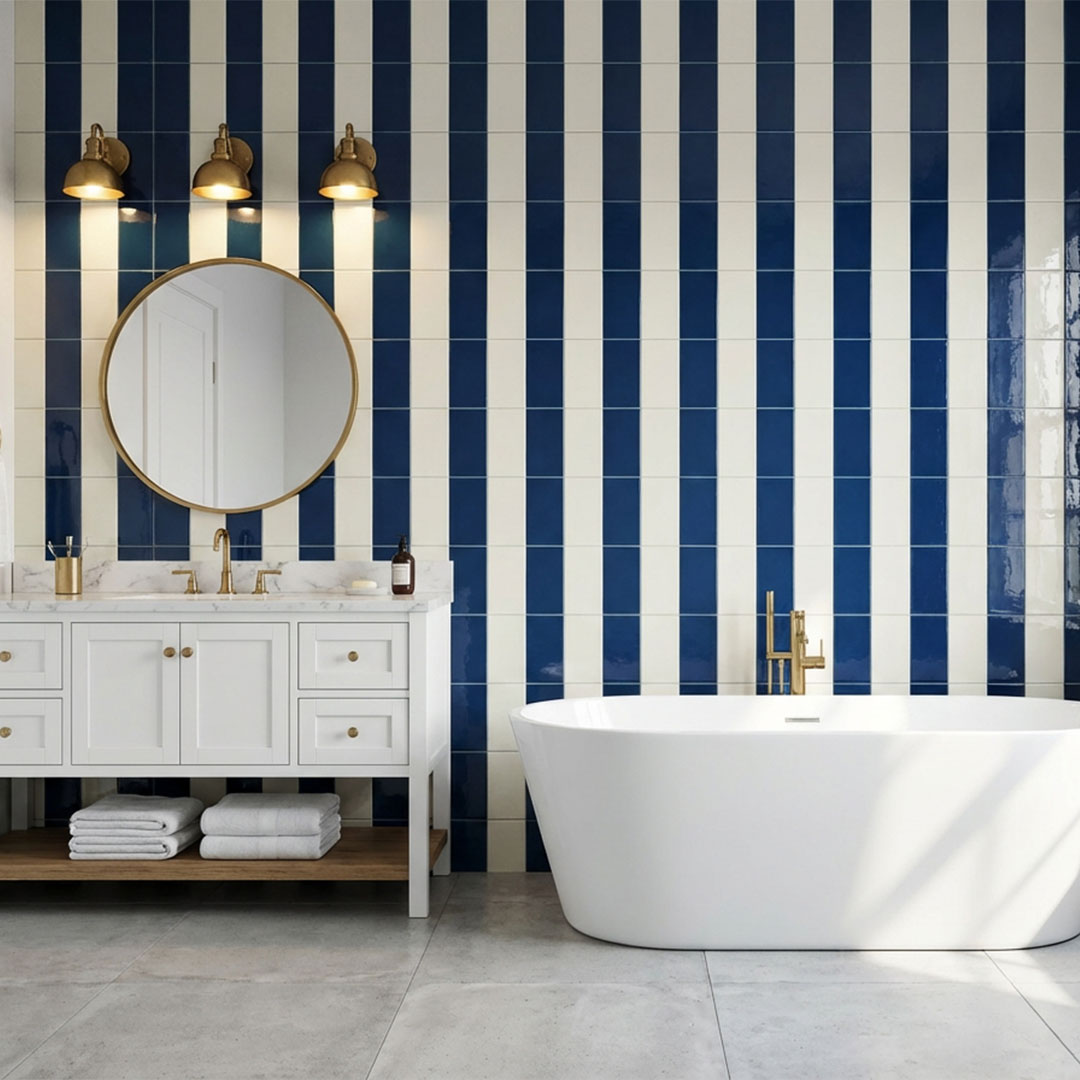
This palette delivers a fresh and confident statement. The depth of teal paired with crisp white creates striking contrast, while the craquelle glaze softens the look with gentle crackle detailing. The result is a striped design that feels bold yet refined—perfect for bathrooms or feature walls seeking a modern take on a traditional colour pairing.
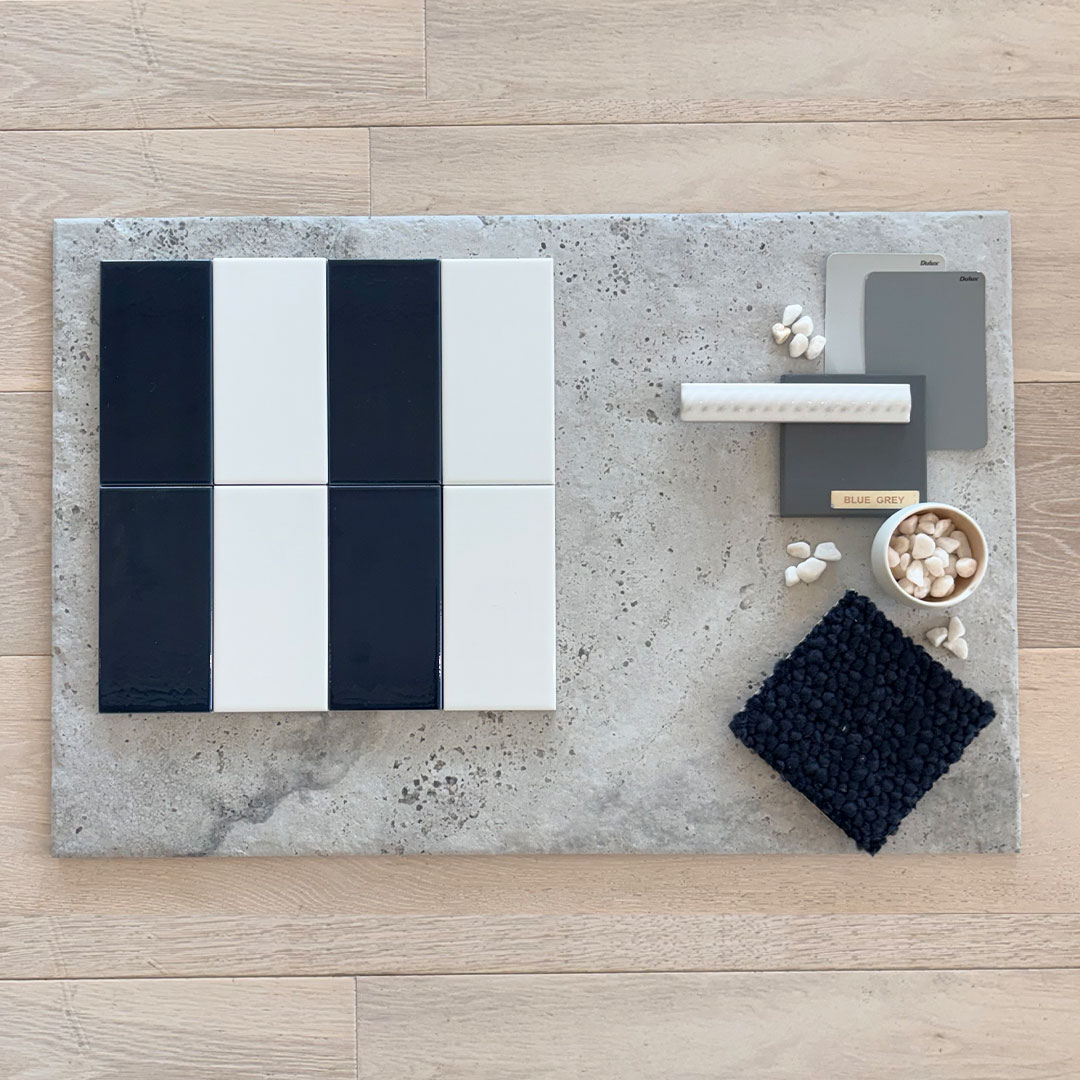
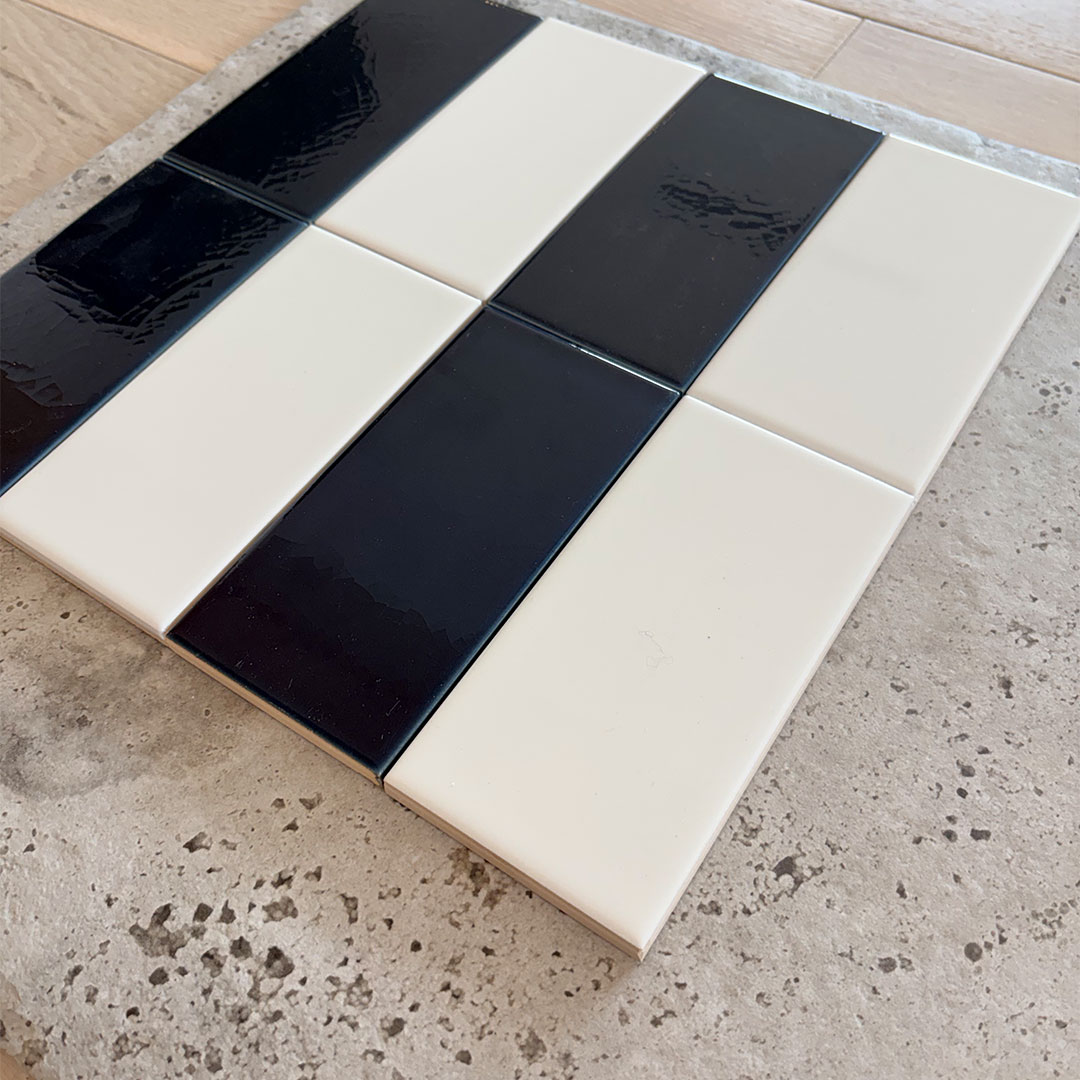
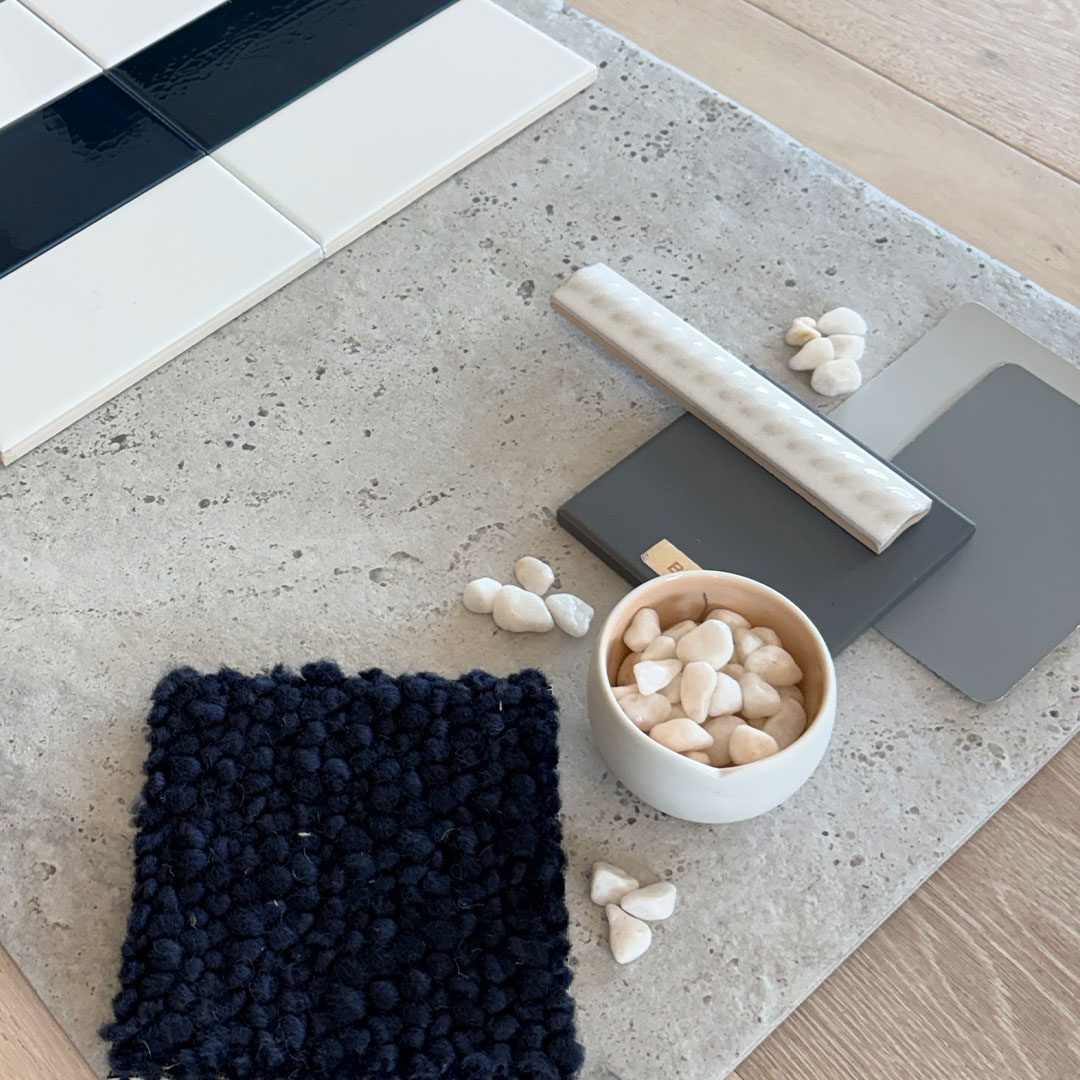
This coastal-inspired Dark teal and white stripe moodboard captures the perfect balance between classic charm and contemporary design. Featuring Craquelle Victorian subway tiles in teal paired with New York classic white subways, the striped layout brings texture, movement, and a relaxed coastal influence to the space. The delicate crackle glaze softens the stripes, adding depth and character while maintaining a fresh, timeless feel.
To ground the palette, the look is paired with the Tile Arena & Co Baroque Grey concrete-look tile, whose deep grey tones complement the cool colour scheme beautifully. This modern surface enhances the coastal aesthetic while introducing a refined, contemporary edge. A cord listello adds an elegant finishing detail, making it ideal for bathroom walls, kitchen splashbacks, or laundry spaces. Completing the moodboard, a blue-grey tessellated tile works seamlessly as a checkerboard floor in blue-grey and white, creating a striking contrast against striped walls. Together, these elements deliver a coastal style with a sophisticated modern twist—effortlessly eye-catching and timeless.
Design INSPO
Honey & Ivory
Warm and inviting, the honey and ivory combination brings subtle elegance to striped layouts. The soft crackle finish enhances the richness of the honey tones while the ivory keeps the design light and timeless. This moodboard proves that stripes can feel understated, offering warmth and sophistication without overpowering the space.
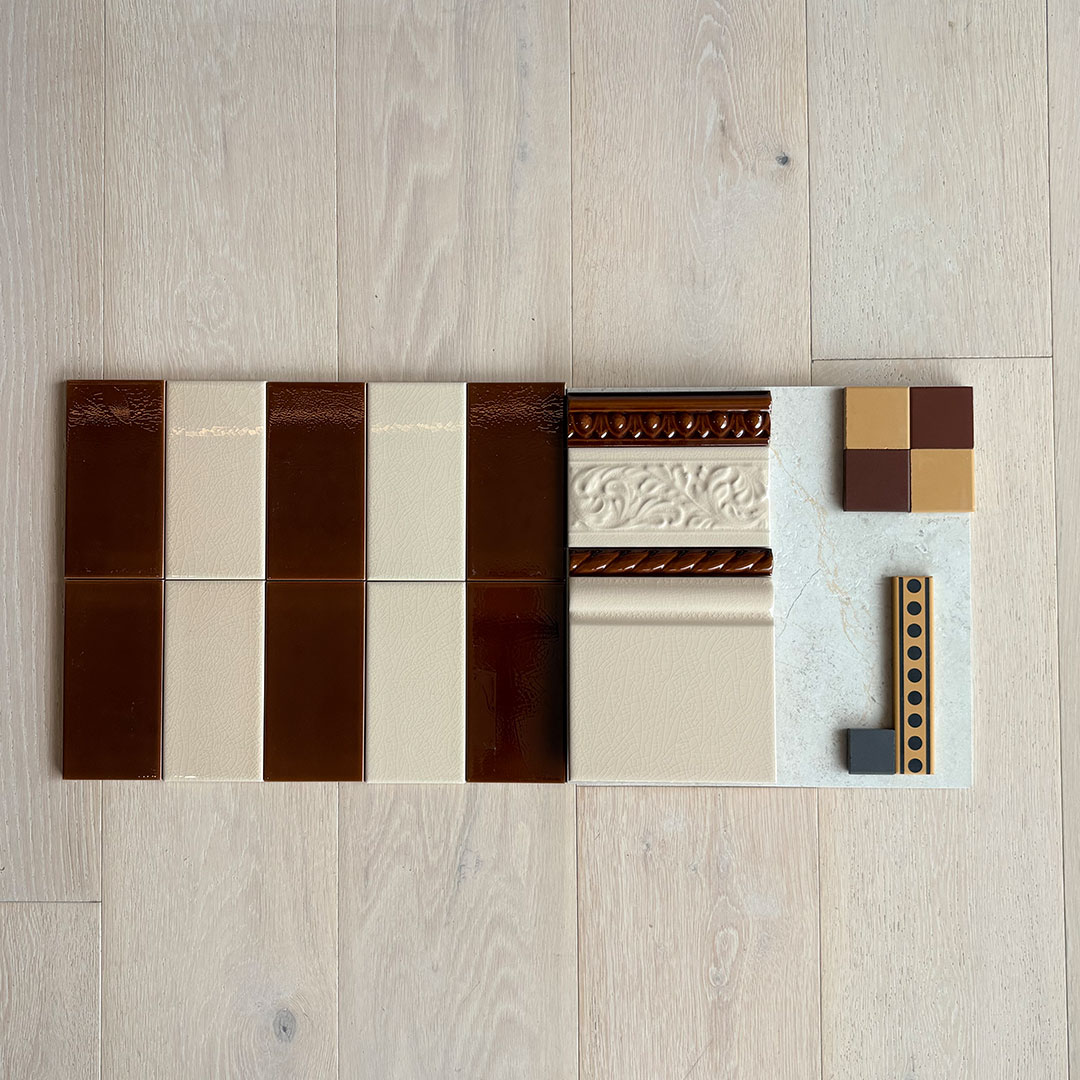
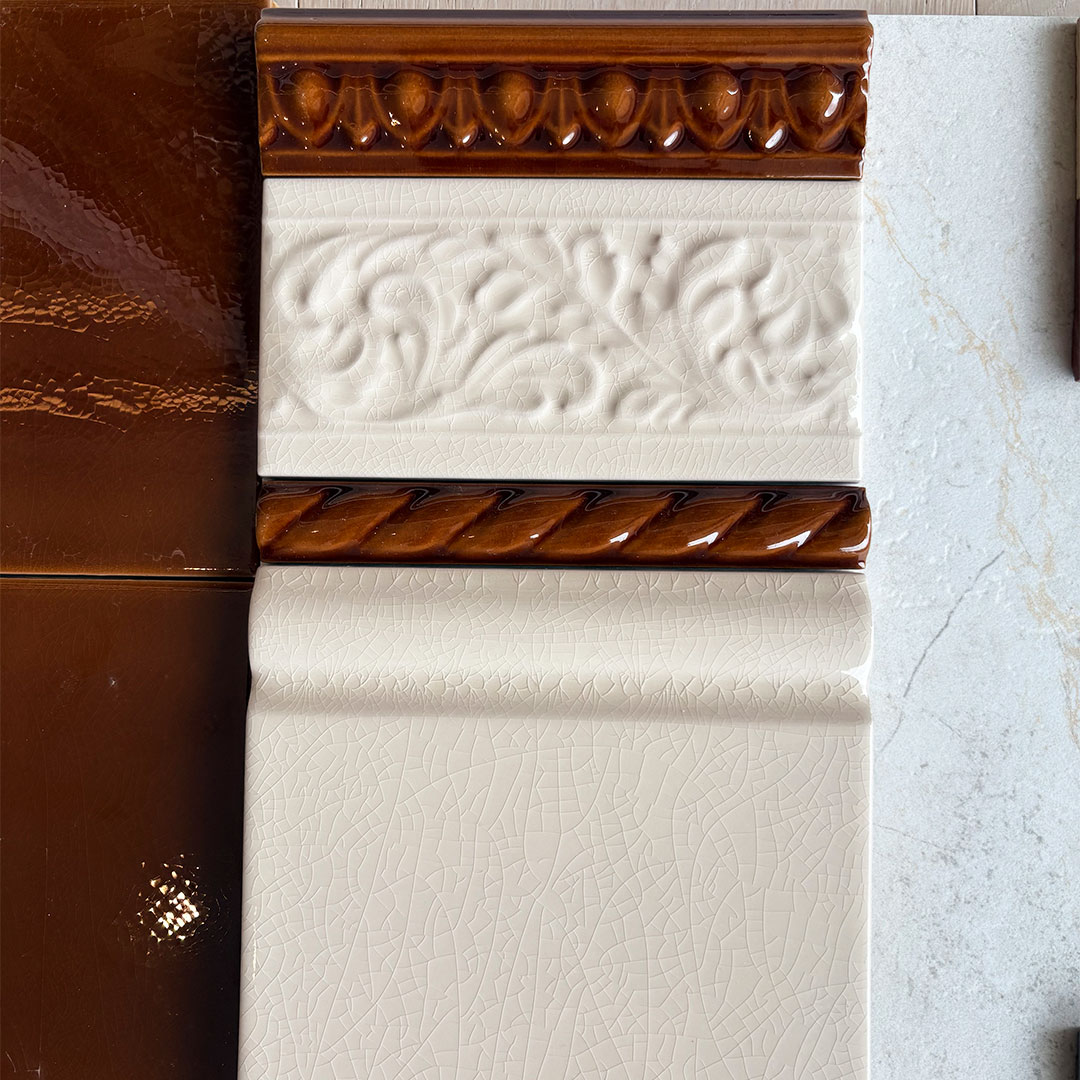
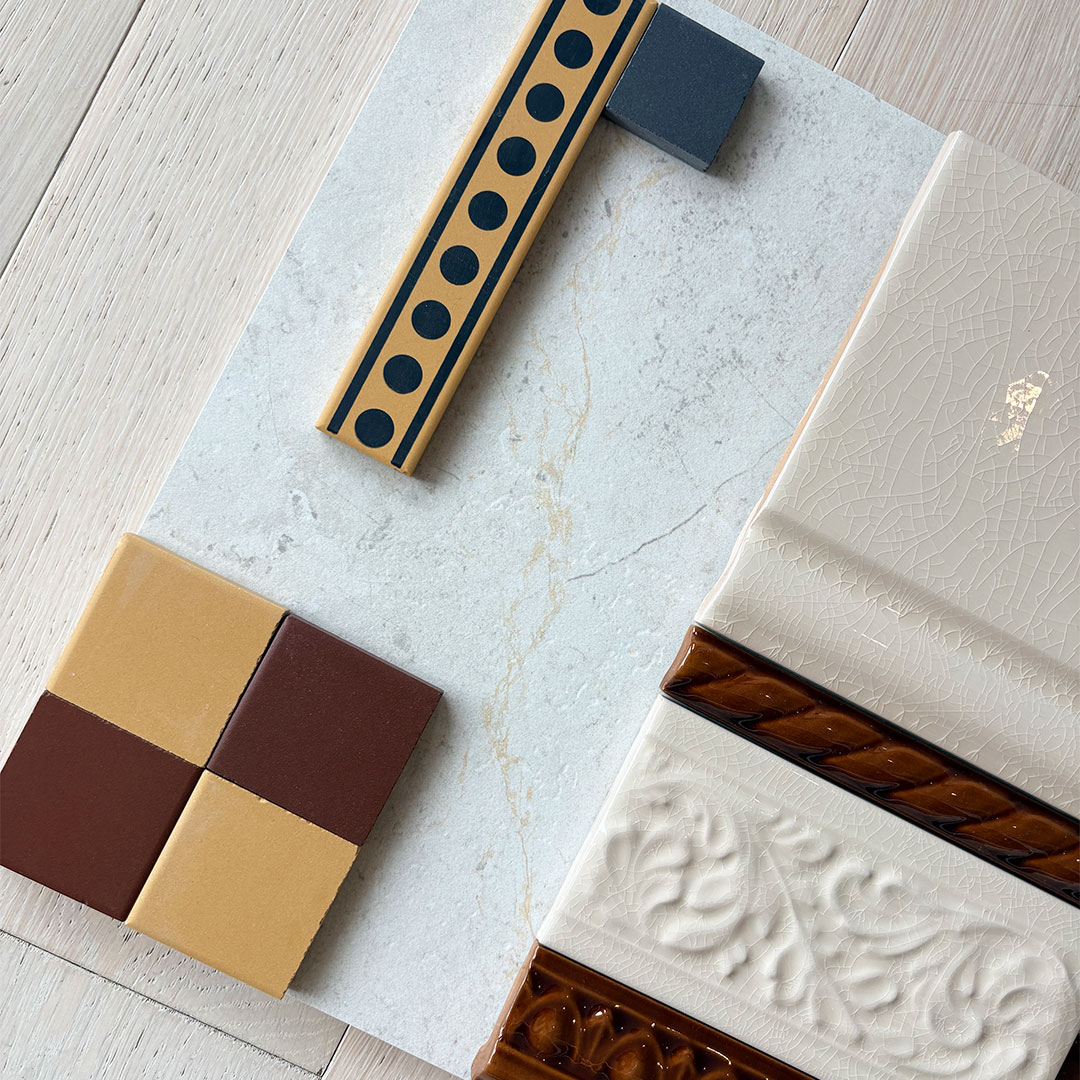
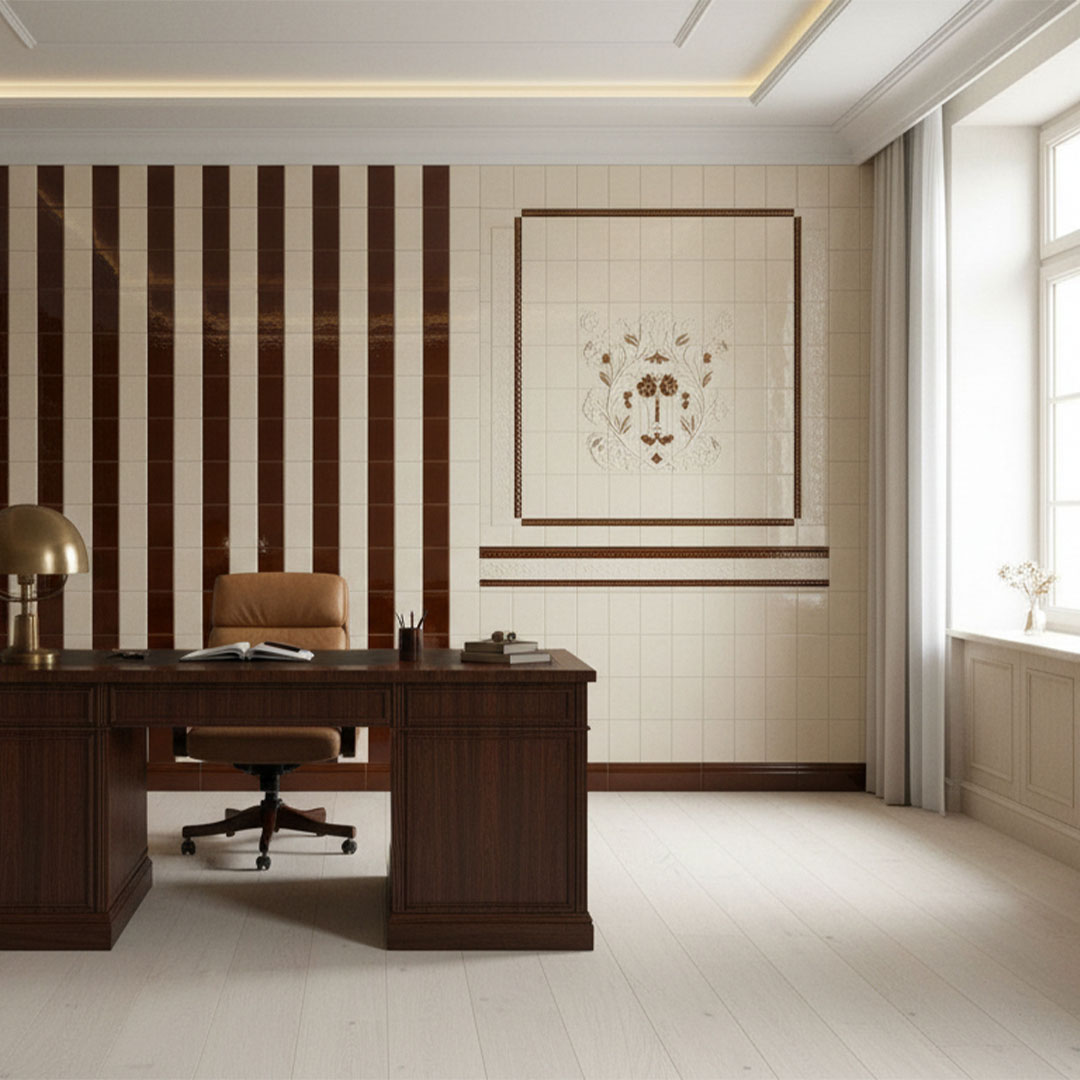
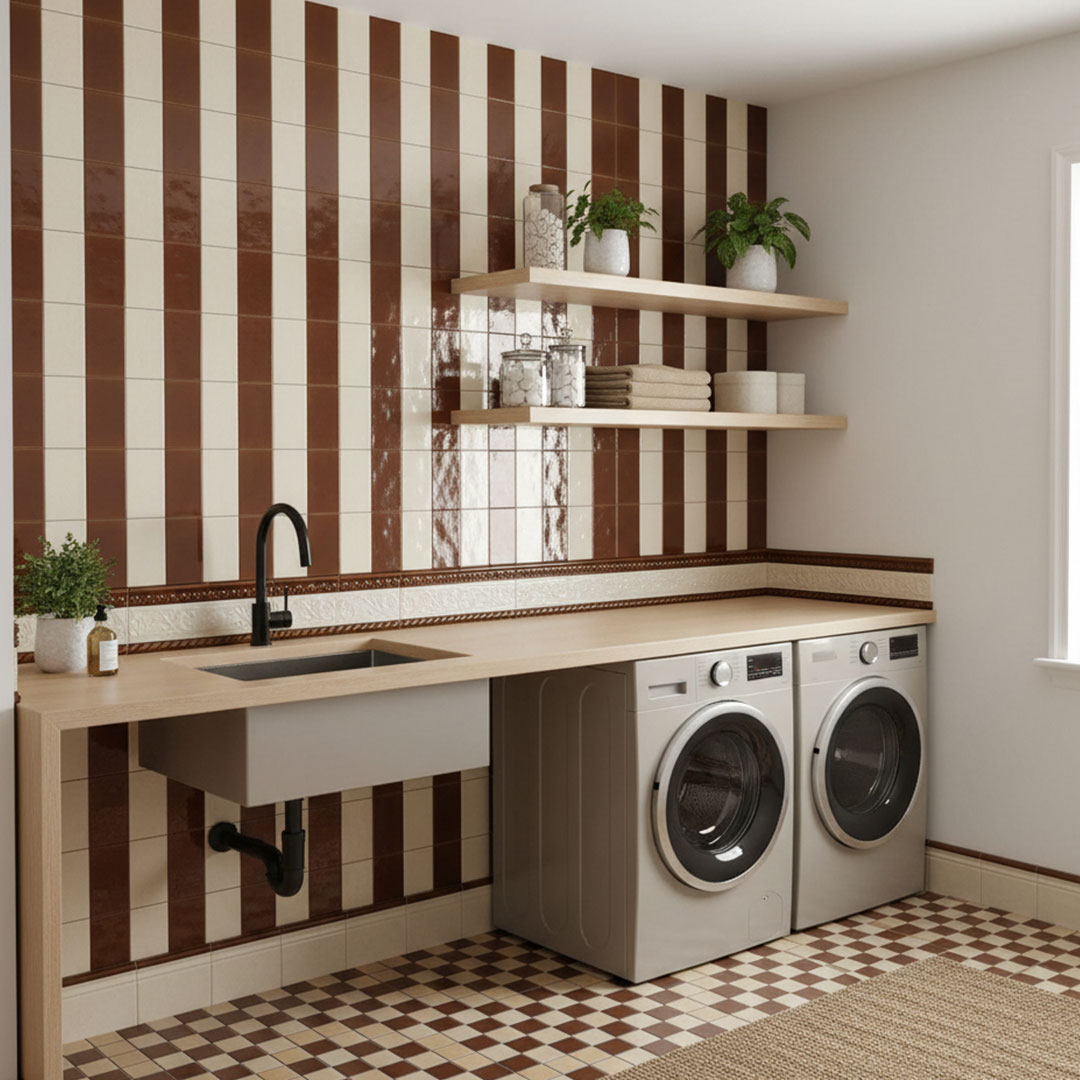
This Victorian-inspired honey and ivory stripe moodboard celebrates timeless elegance through rich colour, texture, and classic detailing. Featuring Craquelle Victorian subway tiles in honey and ivory, the striped wall design evokes traditional Victorian interiors while the delicate crackle glaze adds warmth and depth. The contrast between the two tones creates a refined rhythm across the walls, delivering a look that feels both heritage-rich and visually striking.
To balance the classic palette, the design is paired with Tile Arena & co modern Cosmic – Chalk tile, whose soft, warm surface complements the honey and ivory tones without overpowering them. For flooring, a checkerboard tessellated tile in oatmeal and red enhances the Victorian character, anchoring the space with authenticity and charm. As an alternative wall feature, honey egg & dart and rope listellos, paired with skirting and ivory Corinthian embossed trimming tiles, introduce intricate detailing ideal for bathroom walls, kitchen splashbacks, or laundry spaces. Altogether, this moodboard exudes classic Victorian style—elegant, layered, and beautifully timeless.
Design INSPO
Light Green & Dark Green
A tonal striped approach using light and dark green introduces depth and movement while maintaining harmony. The variation in green hues highlights the handcrafted nature of the craquelle Victorian subways, blending modern colour layering with a classic tile format. This pairing feels grounded, organic, and effortlessly contemporary.
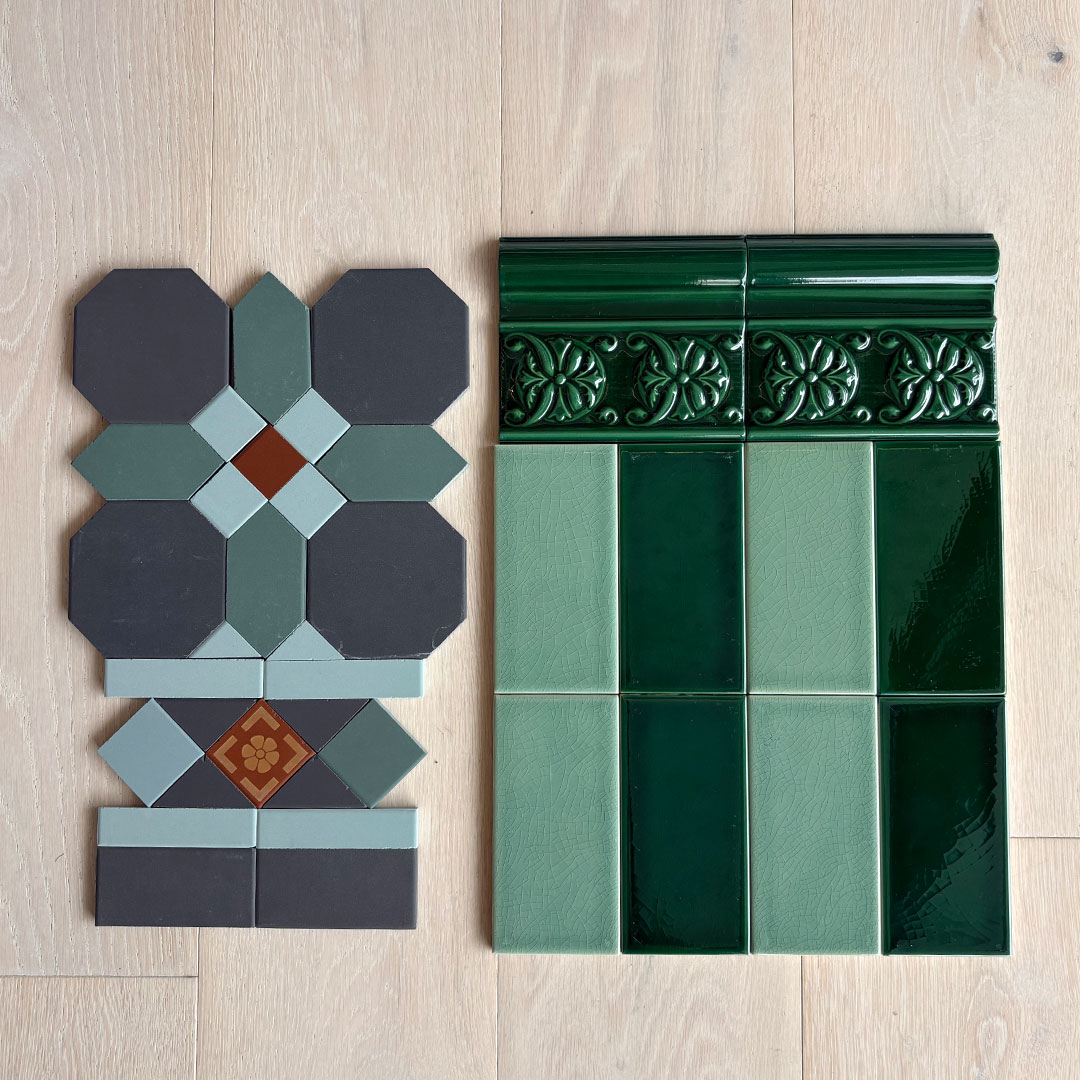
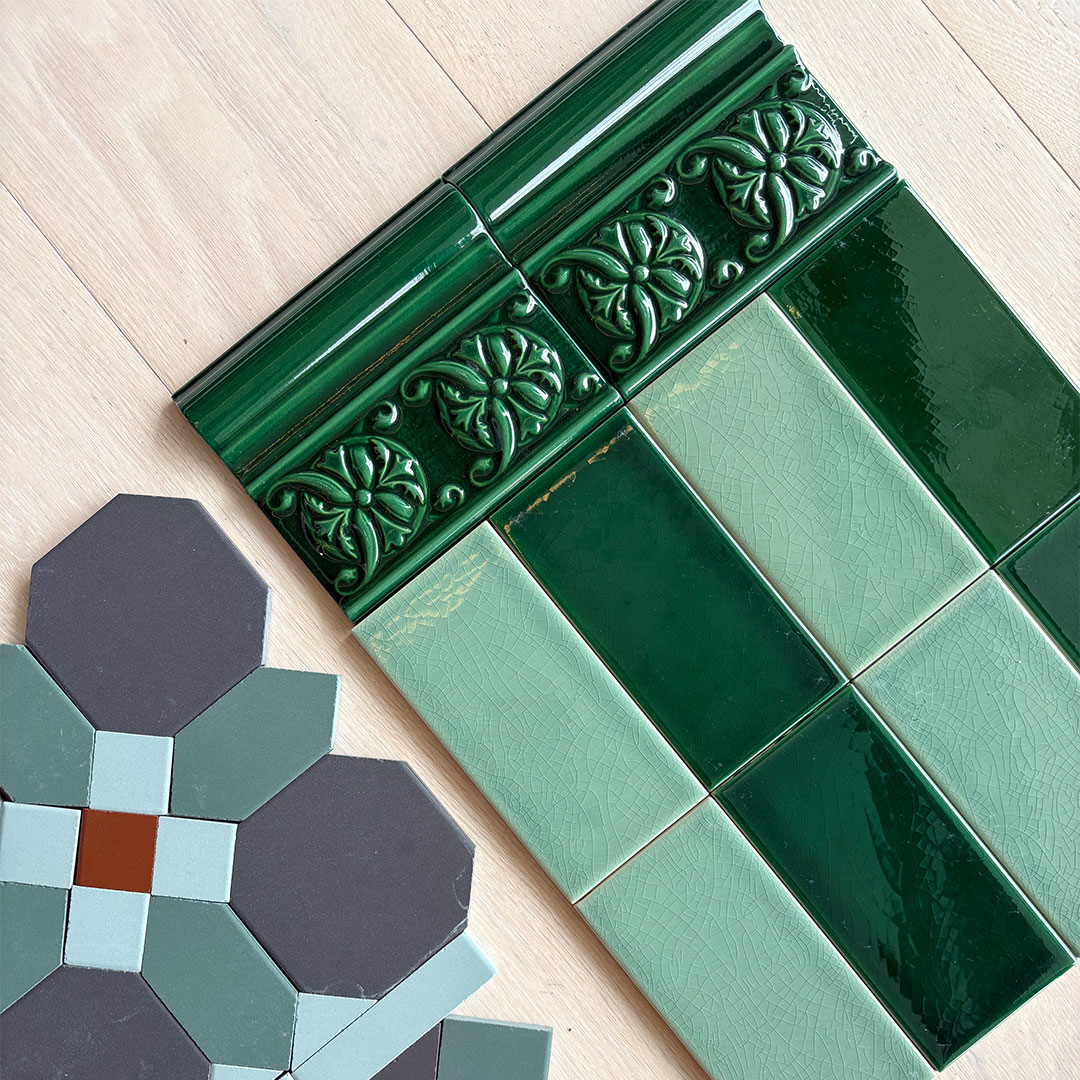
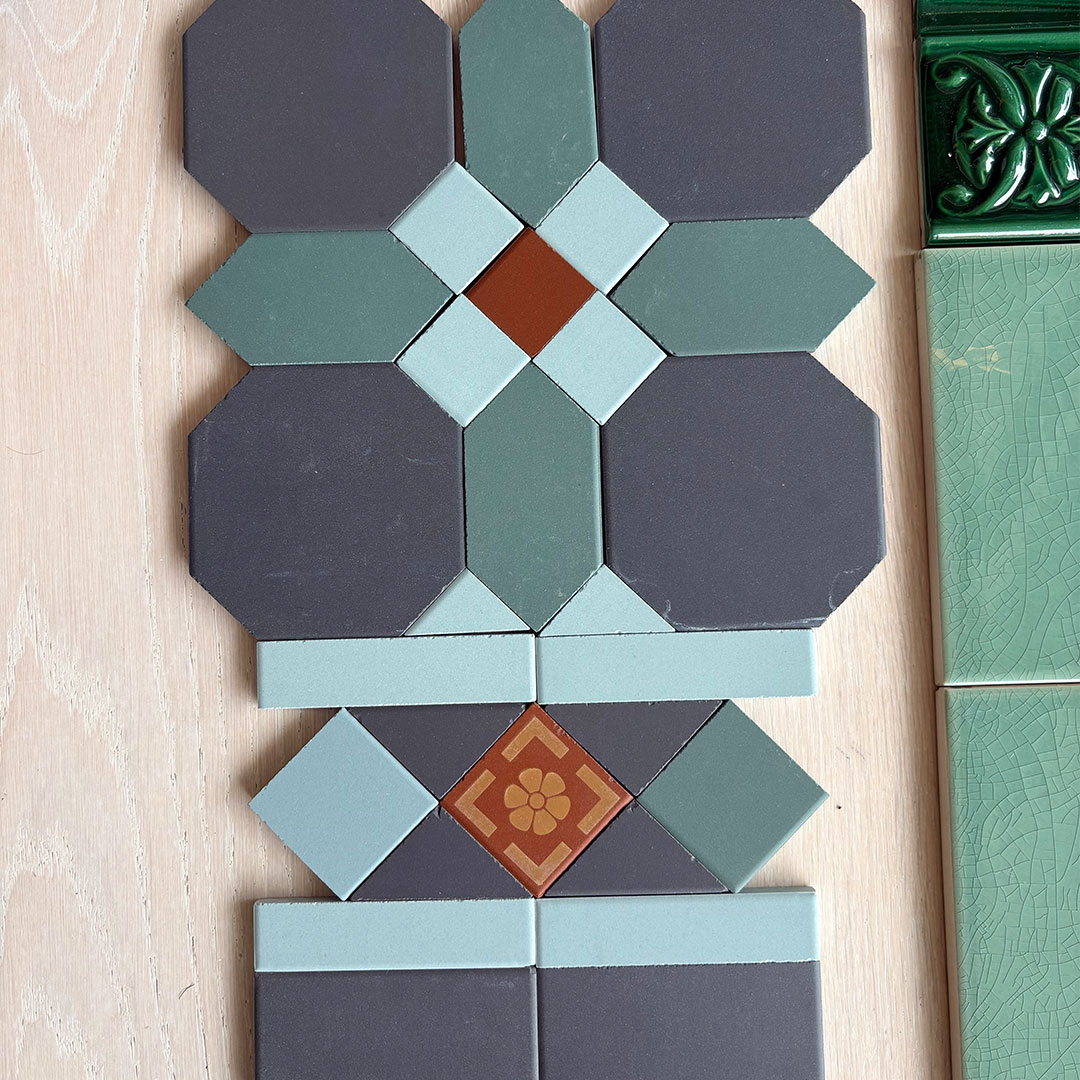
Classic Biophilic-Inspired Dark and Light Green Stripe Moodboard
This moodboard celebrates the timeless elegance of biophilic design, showcasing the harmonious interplay between dark green and light green tones. Featured here are Craquelle Victorian subways in both shades dark green and light green, creating a stunning stripe effect that beautifully balances tradition with a modern twist. The earthy greens evoke a sense of nature, grounding the space while adding depth and sophistication.
Paired with the Nottingham tessellated pattern with Norwood border, this combination brings classic charm to life. The selected tessellated colours — charcoal, green, red, and light blue — complement the Craquelle Victorian subways, enhancing the overall layered and inviting feel.
The contrast between the two green shades in the stripe design creates visual interest, while the addition of trimming tiles such as the bullnose cap and the embossed Helena tile adds an artistic, regal touch. Together, these elements evoke an earthy, luxurious, and welcoming ambiance, perfectly merging classic elegance with the restorative qualities of biophilic design.
Design INSPO
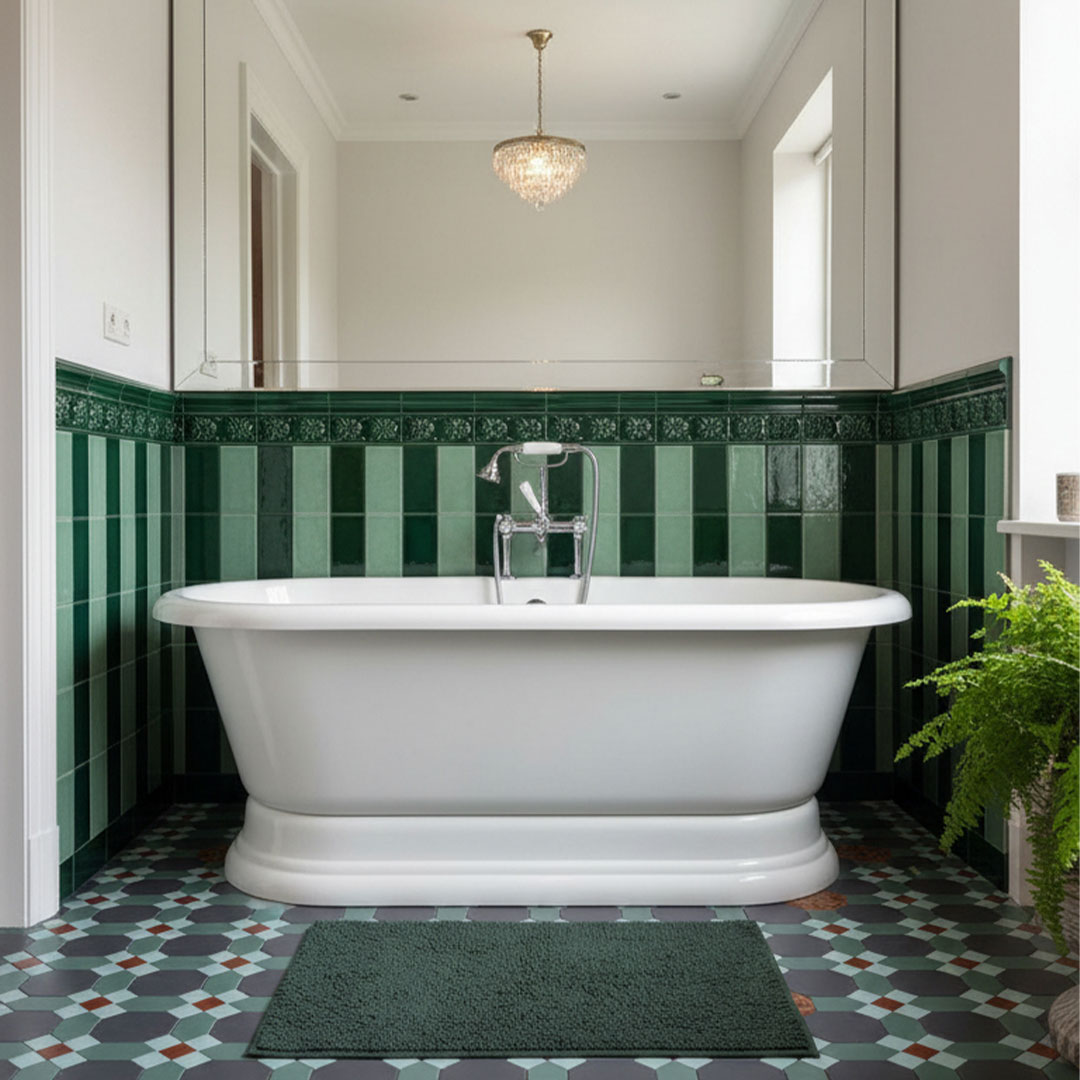
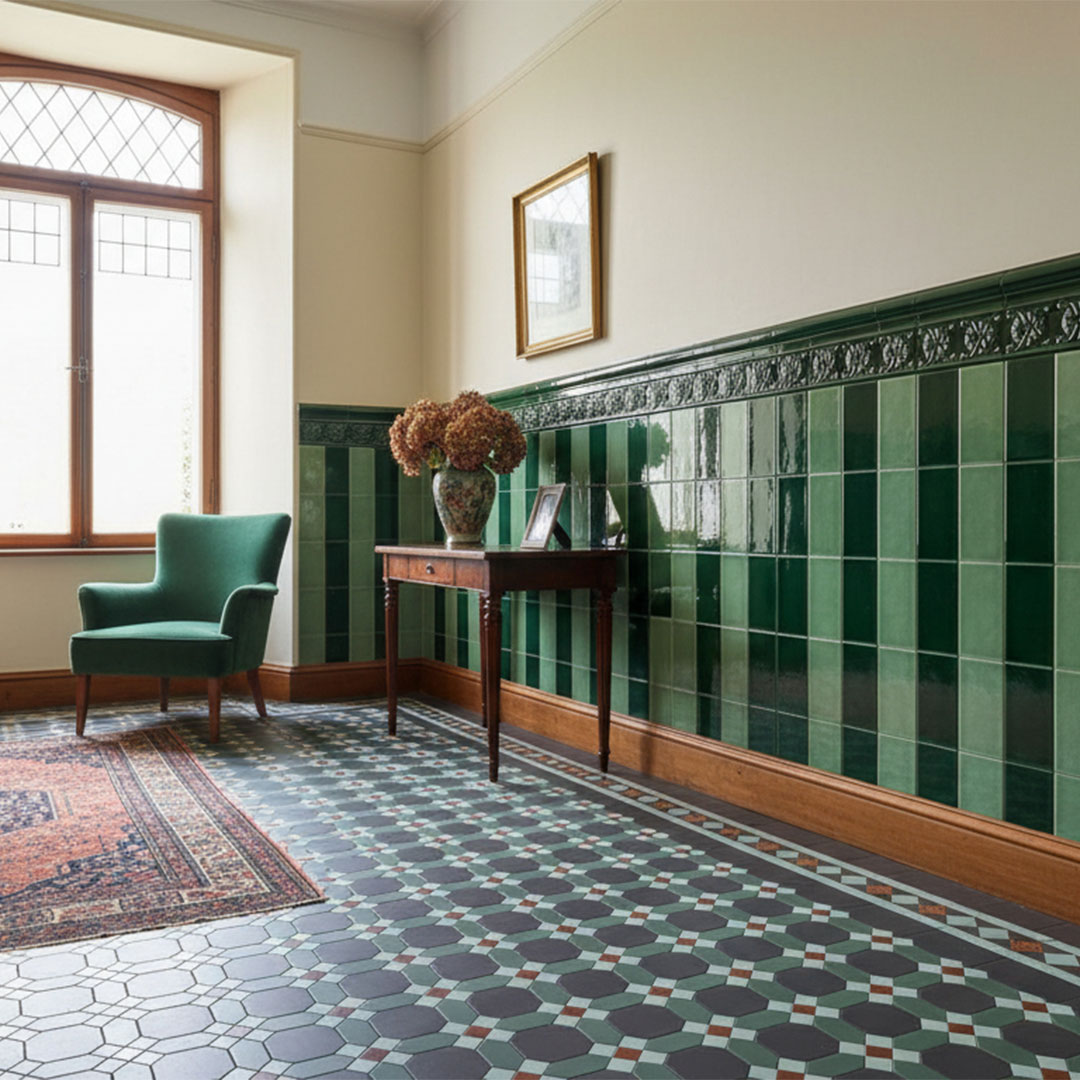
Across all three moodboards, the craquelle finish plays a vital role—bridging classic Victorian character with modern design, allowing striped patterns to feel current, textured, and richly layered.
As stripes continue to dominate interiors in 2026, craquelle Victorian subways offer endless opportunities to reinterpret this enduring trend. Whether bold, tonal, or softly contrasting, striped tile designs can transform walls into timeless yet modern statements.